
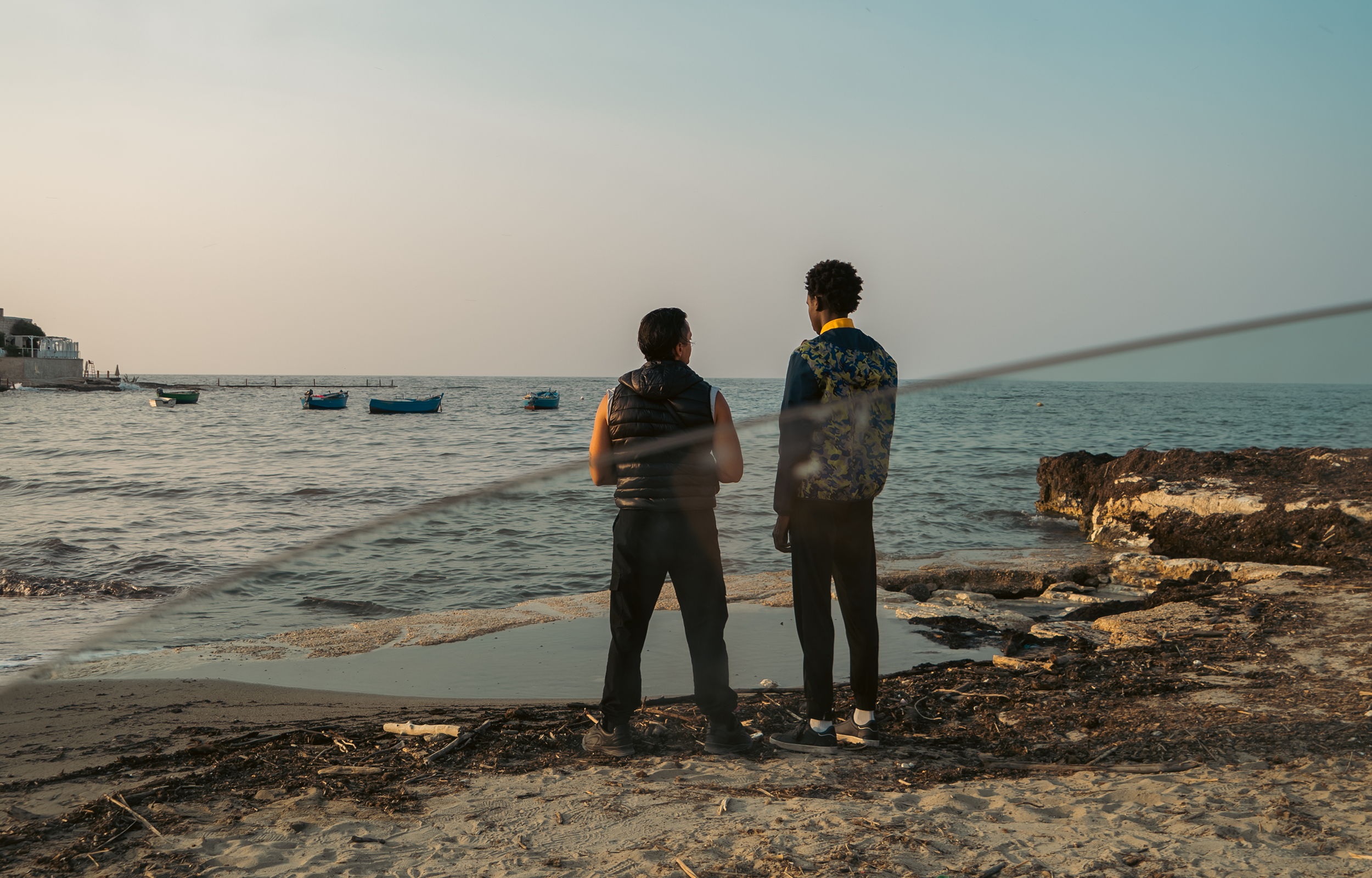
CATTIVA STRADA
di Davide Angiuli
Con Malich Cissé, Giulio Beranek, Lucia Zotti
Italia, 2026, 95’
SINOSSI
A Bari, in un’atmosfera dominata dalle luci al neon dello stadio, Donato è alla ricerca di una soluzione per pagare le costose cure mediche di sua nonna affetta da Alzheimer. Intrappolato nella piccola criminalità albanese e in un vortice di pericolosi crimini, dovrà scegliere se salvare sé stesso o le persone che ama.
.
SYNOPSIS
Set in Bari under the eerie neon glare of the local stadium, Donato desperately seeks a way to afford treatment for his grandmother, who is suffering from Alzheimer’s. Trapped in the grips of small-time Albanian organized crime and caught in a spiral of dangerous job after dangerous job, he must ultimately decide whether to save himself or the people he loves.
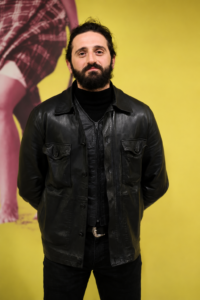
BIOGRAFIA DEL REGISTA
Davide Angiuli. Alla sua opera prima cinematografica, è nato a Bari, vive e lavora a Roma. Dal 2017 ha preso parte a diversi corsi di perfezionamento tenuti dall’Associazione Marco Bellocchio, dal Centro Sperimentale di Cinematografia, dal Locarno Film Festival e dall’EICTV di L’Avana. Parallelamente agli anni di formazione cinematografica ha approfondito la scrittura cinematografica ed è stato influenzato dalla cultura hip-hop. Ha trascorso la giovinezza per le strade di Bari, sul lungomare, dove insieme agli amici ballava break-dance, vivendo anni fortemente legati al mondo rave, hip-hop e alle sottoculture dei sobborghi della città. Da lì ha iniziato a realizzare i primi progetti audiovisivi. Negli anni ha diretto diversi cortometraggi, tra cui C’è di mezzo il mare, premiato al Festival del Cinema Europeo 2021 con il premio Rai Cinema Channel. Tra i progetti di lungometraggi a cui ha lavorato alla scrittura. Thoroughbred – Puro Sangue, preselezionato al Sundance Screenwriters Lab 2018, e Erba Cantante, selezionato al Pitch in the Day 2019. Ha inoltre lavorato alla scrittura di progetti per serie TV, tra cui Conigli Neri, premiato al Premio Carlo Bixio 2021 e allo Screen in Green promosso da Premio Solinas e Fondazione Sardegna Film Commission, e Mamma Ebe, sviluppato durante l’Eureka Series a Lille, in Francia. Cattiva Strada è il suo lungometraggio di esordio. Il progetto è stato presentato all’Apulia Film Forum 2022 ed è stato sviluppato durante lo ScriptINPROGRESS di ANICA ACADEMY.
DIRECTOR BIOGRAPHY
Davide Angiuli, making his feature film directorial debut, was born in Bari and currently lives and works in Rome. Since 2017, he has participated in several advanced training programs organized by the Marco Bellocchio Association, the Centro Sperimentale di Cinematografia, the Locarno Film Festival, and the International Film and Television School (EICTV) in Havana. Alongside his filmmaking education, he deepened his focus on screenwriting, heavily influenced by hip-hop culture. Having spent his youth on the streets and promenade of Bari breaking with friends, his formative years were deeply rooted in the rave scene, hip-hop, and urban subcultures—the very environment where he began creating his first audiovisual projects. Over the years, he has directed several short films, including C’è di mezzo il mare, which received the Rai Cinema Channel Award at the 2021 European Film Festival. His feature script development projects include Thoroughbred – Puro Sangue, shortlisted for the Sundance Screenwriters Lab 2018, and Erba Cantante, selected for Pitch in the Day 2019. He has also co-written TV series projects, including Conigli Neri—awarded at the Premio Carlo Bixio 2021 and Screen in Green (organized by Premio Solinas and the Sardegna Film Commission Foundation)—and Mamma Ebe, developed during the Eureka Series in Lille, France. Cattiva Strada marks his feature directorial debut. The project was presented at the Apulia Film Forum 2022 and developed during ANICA ACADEMY’s ScriptINPROGRESS..
NOTE DI REGIA
Come il ritmo incalzante di un pezzo techno, “Cattiva strada” corre senza pause o respiri.
L’utilizzo di una sola ottica, un 50mm veicolo di immagini brutali e fragili, la quasi assenza di campi larghi e distensivi, la musica soffocante, sono tutti elementi che concorrono a restituire l’apnea in cui nuoterà Donato fino al suo ultimo tentativo di tornare a respirare in superficie. Donato, il protagonista di “Cattiva strada”, è un irrisolto. Uno di quegli abitanti del mondo che non sentendosi a proprio agio con quello che sono, trascorrono ogni minuto concessogli nel tentativo di diventare, o fingere di essere, qualcos’altro. Nel tentativo di raccontare Donato e il suo rito di passaggio all’età adulta, si affianca l’occasione di scoprire la cultura che lo circonda e nella quale è costretto ad agitarsi: una Bari che Donato riesce a scorgere attraverso i finestrini della sua auto e i chilometri d’asfalto che macina. I sobborghi di Bari, la città dove sono nato, rappresentano la periferia che fa da sfondo alla narrazione. Una periferia dove le strette di mano vanno accompagnate da sguardi fieri e dove il controllo esercitato sulle grandi città ha maglie più larghe e scivola dai suoi interstizi. Un civilizzato regno animale, legato stretto dalle rotaie della stazione. L’unica lingua consentita: il dialetto. L’intenzione è quella di riuscire a descrivere questi ambienti senza manierismi, e che Bari e ciò che circonda questo cupo e febbrile paese dell’Italia meridionale, diventi il vettore affilato che guida la speranza di Donato di non rimanere solo. La fuga dalla propria solitudine e dalle sue declinazioni è una costante endogena, fortemente radicata in ognuno di noi. E con “Cattiva strada” proviamo ad analizzarla senza didascalismi o facili risposte a tesi, attraverso un racconto asciutto ma non cupo, intenso ma che sa sciogliersi in momenti di grande leggerezza, scandagliando i compromessi necessari al non sentirsi soli, persi sull’asfalto della vita.
DIRECTOR STATEMENT
Like the relentless driving beat of a techno track, Cattiva strada moves without pause or respite. The decision to shoot entirely with a single 50mm lens—the vehicle for imagery that is both brutal and fragile—the near-total absence of wide, relaxing shots, and the suffocating score all contribute to recreating the state of asphyxiation in which Donato swims, until his final desperate attempt to surface and breathe again. Donato, the protagonist of Cattiva strada, is unresolved. He is one of those people who, feeling uncomfortable in their own skin, spend every waking moment trying to become—or pretend to be—something else. In recounting Donato and his rite of passage into adulthood, we are given the opportunity to explore the culture that surrounds him and in which he is forced to struggle: a side of Bari that Donato catches only through his car windows and the endless miles of asphalt he grinds through. The suburbs of Bari, the city where I was born, form the backdrop to this story. It is a periphery where handshakes must be met with proud, unyielding gazes, and where the control exerted over major cities loosens, slipping through the cracks. A civilized animal kingdom, bound tightly by the station’s railway tracks. The only permitted language: dialect. My intention was to capture these environments without mannerism—for Bari and the region surrounding this dark, feverish Southern Italian city to become the sharp vector driving Donato’s hope of not being left alone. The flight from one’s own loneliness, in all its forms, is an essential human drive deeply rooted within each of us. With Cattiva strada, we attempt to analyze this drive without preachiness or easy, thesis-driven answers. We do so through a lean yet not bleak narrative—intense, yet capable of dissolving into moments of great lightness—plumbing the depths of the compromises we make to avoid feeling lost and alone on the asphalt of life.
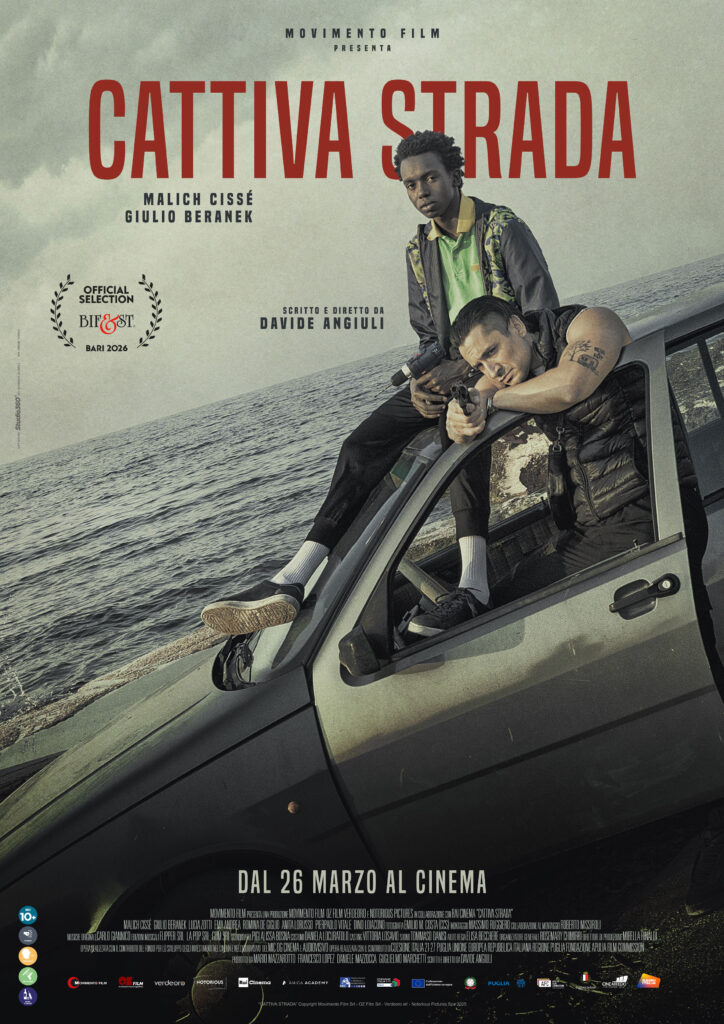
POSTER
– torna nella sezione principale > LUNGOMETRAGGI
